
Inflation is defined as the slow rise of prices of goods and services as time goes by thus weakening the purchasing power of Investments. In the high inflation periods, cash savings become devalued and investors have to find a way of preserving or increasing their wealth in real terms. Investment strategies which have been working in the stable economic environment might fail when the inflation increases at a great rate.
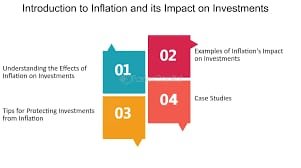
The result of high inflation is usually high rates of interest, high expenses in businesses and economic insecurity. These factors have the potential of manipulating stock markets, bond yields, and real estate prices. The returns of investors who do not change their strategies might be washed away. Nevertheless, using the appropriate strategy, one can not only save money, but also use opportunities that inflationary conditions open.
Investing in Real Assets
Investing in real assets is one of the best measures that can be used when inflation levels are high. Physical assets are the tangibles that comprise of real estate, commodities, and infrastructure. Such assets usually maintain or even appreciate in view of inflation since the prices generally go up with the level of general prices.
An example of such entail is in real estate which can yield real estate capital appreciation as well as a rental. With rising inflation, property prices and rents are generally on the upward trend and hence real estate is a good hedge. Likewise, other commodities like oil, gold and farm products tend to be good due to the fact that their prices are directly related to supply and demand forces, which are susceptible to inflation.
The purchase of real assets would also aid in saving buying power and provide some form of security that financial assets might not offer.
The place of Stocks in Inflationary Periods
Although inflation may bring about volatility in stock markets, equities may be an important ingredient of investment portfolio. Companies that enjoyed high pricing power that is, able to transfer higher costs to the consumers were likely to perform better in these periods of inflation. These are businesses in the consumer goods industry, energy industry, and in the healthcare industry.
Value stocks can be a good way to go in an inflationary situation, whereas growth stocks might fail in high interest rate situations. Investors need to concentrate on businesses which have strong balance sheets, stable earnings and those which can adjust to evolving economic environments. Stocks that pay dividends also serve as a good way of generating a constant stream of revenue that grows even more significant when the price of living increases.
The diversification into other sectors also has a potential of minimizing risk and enhancing the likelihood of attaining stable returns.
Inflation-Protected Securities
Inflation-protected securities are another good option in investment. These are financial instruments that are specifically created to protect investors against inflation. The dividends of such securities are fixed according to the inflation rates whereby the purchasing power of the investor is preserved.
An example is the inflation-linked bonds issued by governments. They offer a comparatively low-risk investment opportunity and protection against an increase in the prices. The returns are not that high as in the case of equities or real assets but they bring some stability in a portfolio and are a sure hedge at a time when there is uncertainty.
Having these securities on a diversified portfolio would help to balance the risk and have peace of mind in a time of economic instability.
Commodities as a Hedge to Inflation
Traditionally, commodities have been viewed as a classic insurance against inflation. Increased inflation usually leads to increased prices of raw materials like oil, metals and food products. This is what renders commodity investments very desirable at such times.
Gold has been considered as a safe haven asset. During economic unpredictability and currency devaluation, investors retreat to it. Also, energy commodities such as oil and natural gas are likely to enjoy the demand and supply restrictions that are caused by inflation.
Nonetheless, the investment in commodities may be unstable and depends on the economic situation in the world, the political events and speculations on the market. Hence they must be dealt with cautiously and as a part of a bigger investment strategy other than the focal point.
The Significance of Diversification
The success of Investments is the rule of diversification, particularly in high inflation. This will help investors to diversify their investment in various asset categories and this will reduce the risk as well as increase their likelihood of receiving steady returns. Well-diversified portfolio can consist of stocks, real assets, commodities, and inflation-protected securities.
Various types of assets respond differently to inflation and thus, a balance portfolio will mean that losses incurred in one segment are offset in the other segment. Diversification is also useful in ensuring that investors avoid market fluctuations and have long-term financial stability.
During the time of economic uncertainty, it may be dangerous to make one kind of investments. Diversity offers flexibility and strength.
Investing in Foreign Assets
The currency of a country can be undermined by high inflation decreasing the worth of investments within the country. The idea of investing into foreign assets can be cunning in such situations. Exposing oneself to less inflationary or more promising economies can be achieved through international stocks, bonds and real estate.
Currency diversification is additionally used to reduce risks of the local currency devaluation. When the local currency undergoes a devaluation, the returns of foreign investments in other stronger currencies could be higher.
Nonetheless, international investment is associated with its own risk factors such as currency exchange, political instability and regulatory variations. Research and strategic allocation is crucial to success.
Sustaining Liquidity and Flexibility
Economic conditions are subject to change in a short period of time in times of high inflation. Liquidity is important, which is the ability to access funds in the form of cash or easily sellable assets to seize new opportunities or deal with any unforeseen costs.
Although it is not good to keep too much cash, having some share of a portfolio in the liquid form enables the investors to react promptly on the changes in the market. The ability to have a flexible investment strategy is also significant. Having the intention to change allocations in accordance with economic trends may make a big difference in overall performance.
Long-term investments coupled with short-term flexibility can be a good solution that can lead investors to sail through the turbulent times.
Avoiding Common Mistakes
When inflation is high, Investments are known to make many mistakes, which are all due to emotional reactions to the fluctuations in the market. The poor results can be caused by panic selling, pursuit of instant profits, or lack of diversification. One should not lose sight of long-term objectives and take any impulsive actions.
The other error that is shared is that of underestimating the effects of inflation on returns. The importance of accounting real returns, inflated returns, should never be ignored by investors but nominal gains. This viewpoint is a better way of explaining investment performance.
These pitfalls need to be averted through careful planning, discipline and constant monitoring.
Constructing a Long-Term Strategy
A high inflation rate may be a challenge but it is also an opportunity to informed Investments. The main idea behind the maintenance and increase of wealth is to build a long-term investment plan that would consider inflation. This is by choosing the appropriate combination of assets, diversification and keeping flexible to fluctuating economic times.
It is time that Investments check their portfolios periodically and make necessary corrections. It can also be helpful to consult with a professional, particularly to those who are confused about their approach to the tricky financial markets.
Finally, Investments successfully under high inflation conditions is a matter of factors; one should have knowledge, patience, and foresight. This is possible by concentrating on assets that are not wasted, diversification and having a disciplined approach will help investors to secure their wealth and meet their financial targets despite the harsh economic conditions.